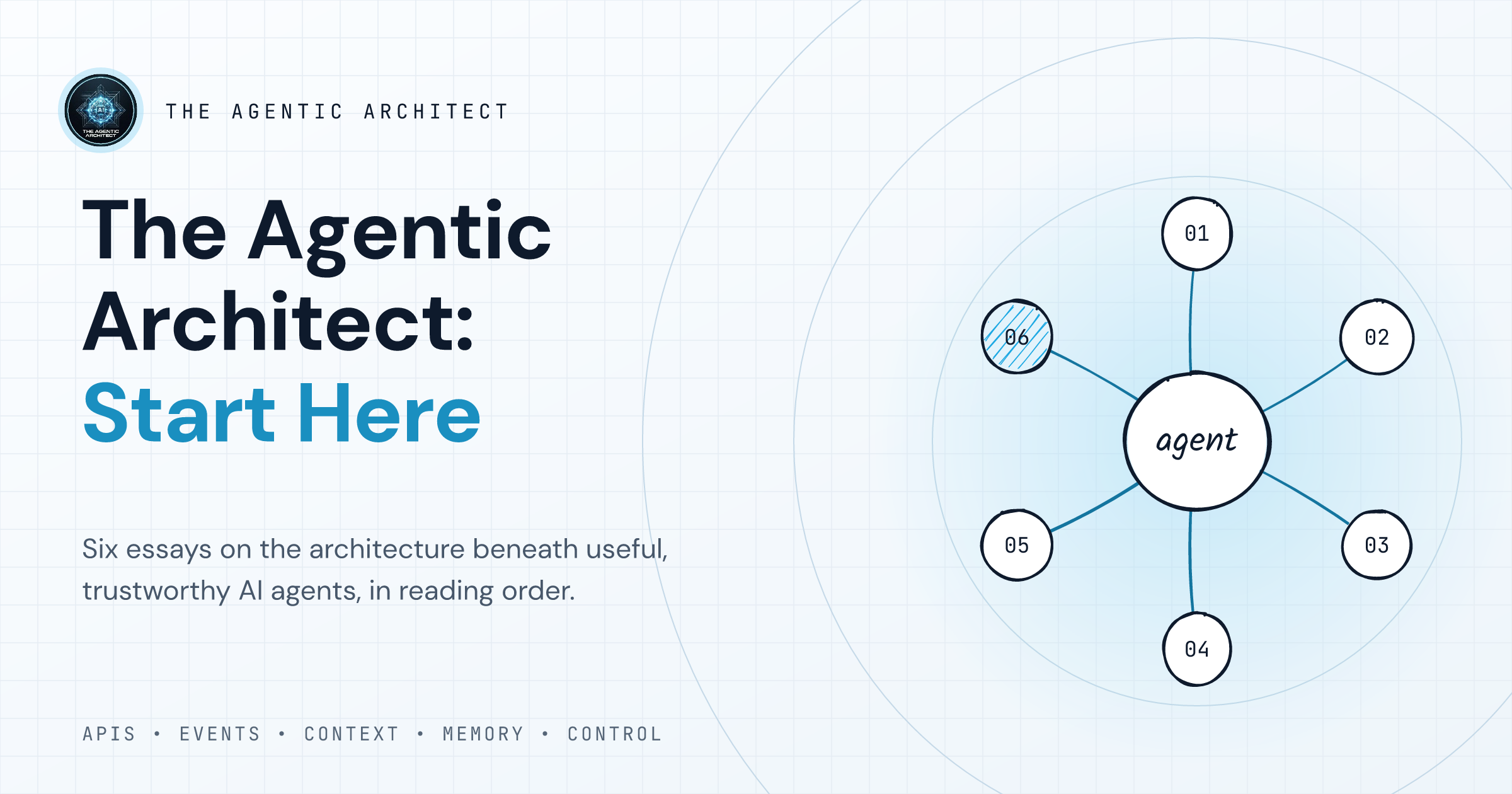
The Agentic Architect: Start Here — six numbered essays orbiting a central agent

Start Here: Six Essays on the Architecture Beneath AI Agents

Everyone is talking about agents. This site is about the architecture underneath them. If you are new here, start with these six essays. They explore the infrastructure that connects agents to the real world: APIs, events, context, memory, tools, and other agents. They are not about finding the perfect model. It was about building systems that can make a capable model useful and safe to trust. They start from a simple observation: intelligence is only one part of an agentic system. An agent also needs timely information, well-designed capabilities, clear authority, a reliable record of what happened, and controls that continue to work when the path through a task is not known in advance. ...
November 2, 2026 · 4 min · 650 words · Hugo Guerrero
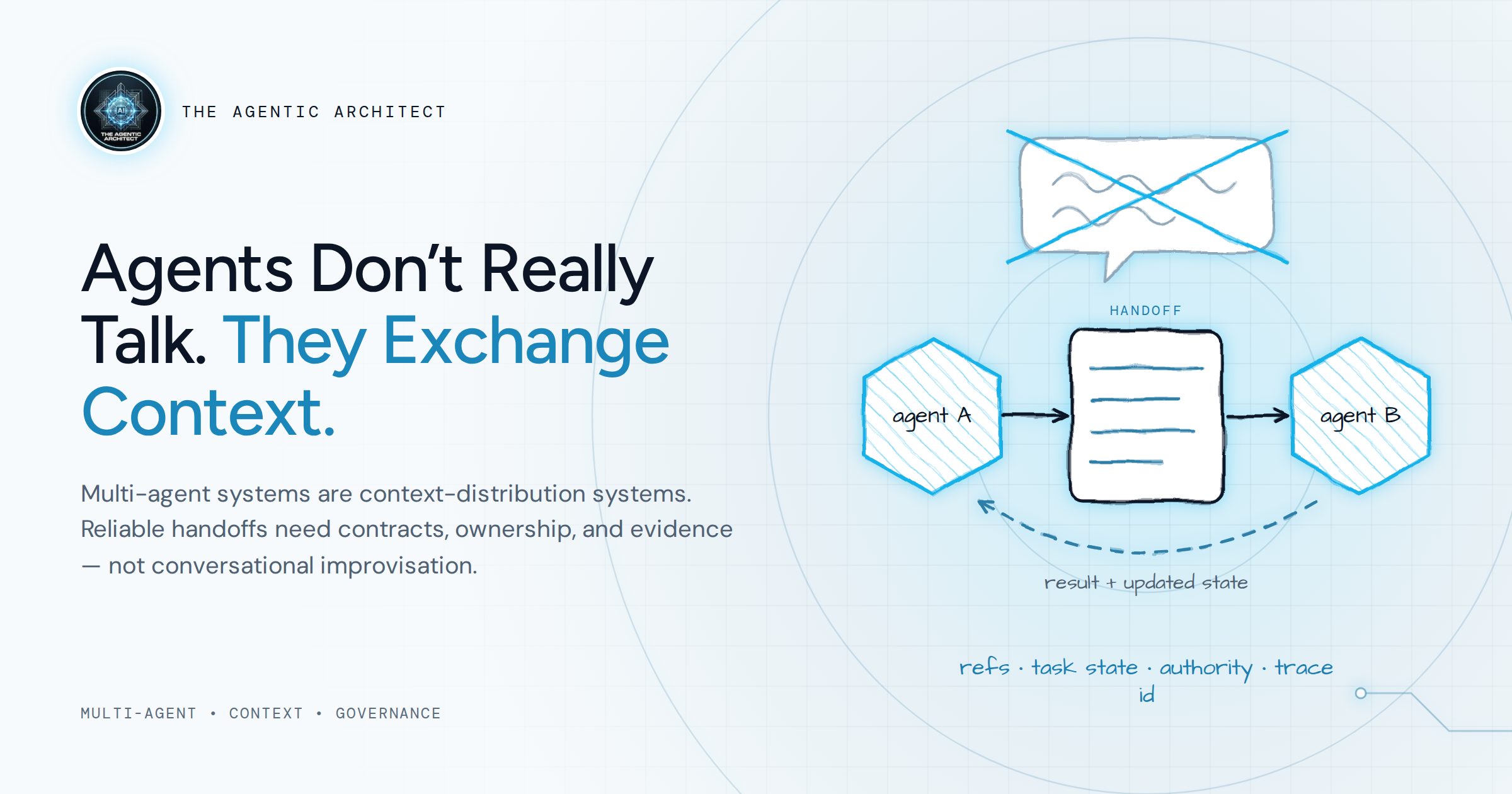
Agents Don’t Really Talk. They Exchange Context — two agents connected by a handoff, not a chat bubble

Agents Don’t Really Talk. They Exchange Context.

Multi-agent demos make it look as though agents are having a conversation: one delegate asks another for research, a specialist returns an answer, and an orchestrator turns it into action. That image is useful, but incomplete. Agents do not collaborate because they can exchange prose. They collaborate because one part of a system can make the right context available to another part at the right time. The architecture of that handoff determines whether a multi-agent workflow is reliable or merely entertaining. ...

October 13, 2026 · 4 min · 804 words · Hugo Guerrero
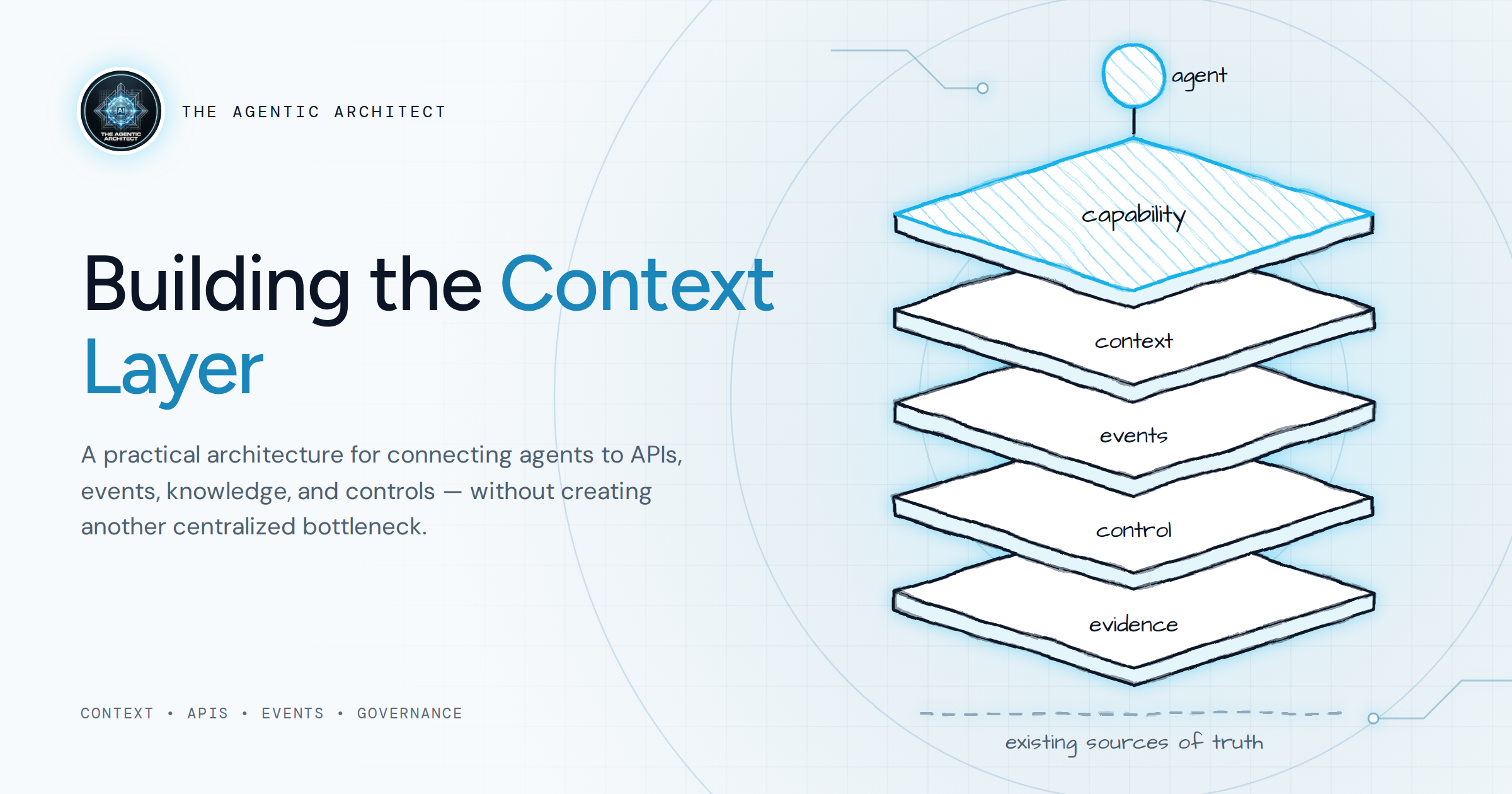
Building the Context Layer — capability, context, event, control, and evidence layers stacked beneath an agent, on top of existing sources of truth

Building the Context Layer

Once an organization accepts that agents need governed, current context, the next question is unavoidable: what do we actually build? The answer is not an all-powerful agent platform that absorbs every system. It is a set of layers that make existing capabilities usable in a new way. The goal is to preserve domain ownership while giving agents a safe, observable path to information and action. Think of the context layer as connective tissue rather than a replacement for the systems that already hold the truth. ...

October 6, 2026 · 5 min · 887 words · Hugo Guerrero
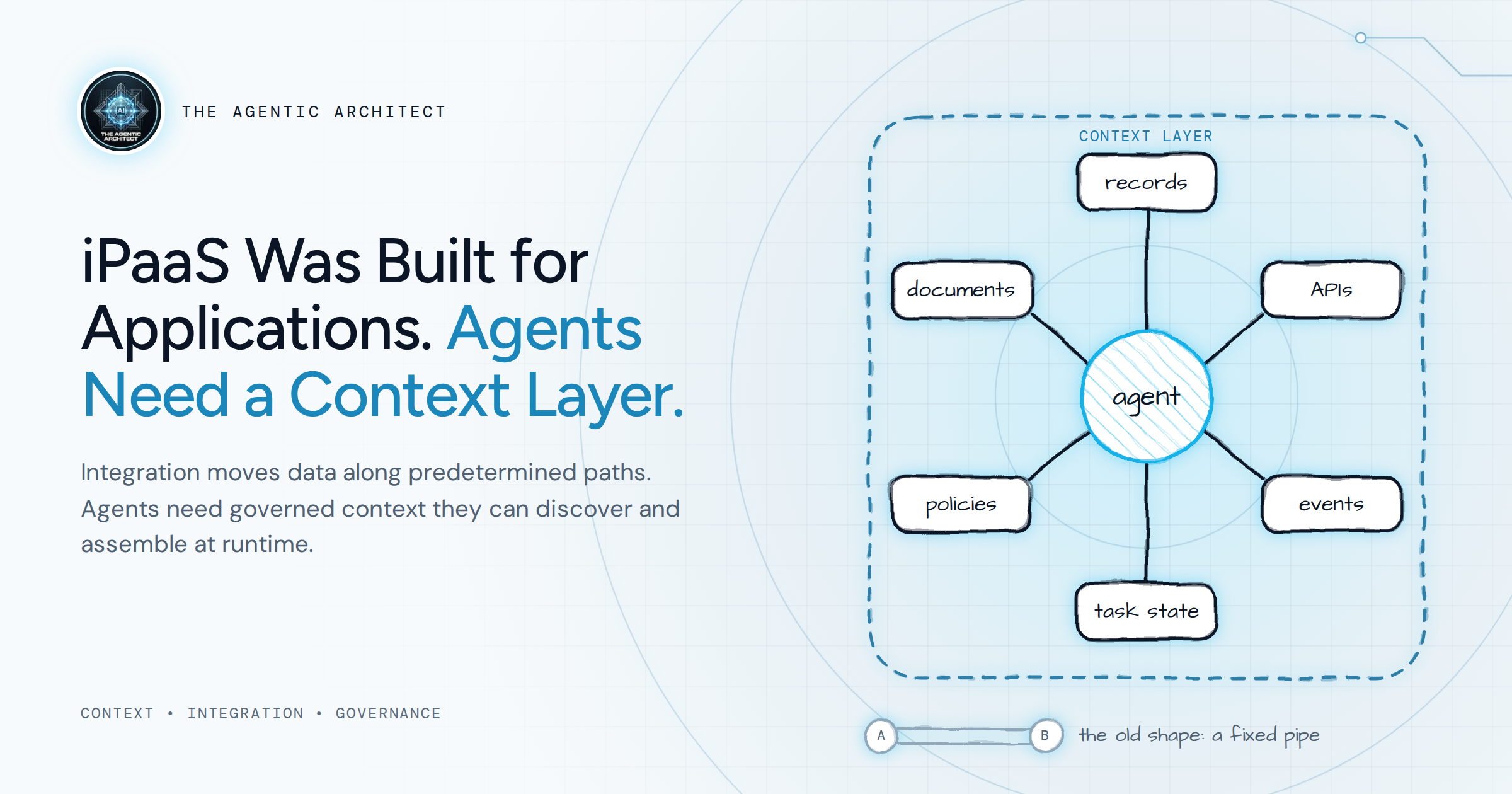
iPaaS Was Built for Applications. Agents Need a Context Layer — a context layer connecting an agent to records, APIs, events, documents, policies, and task state

iPaaS Was Built for Applications. Agents Need a Context Layer.

Integration platforms earned their place in the enterprise by solving a real problem: connect known systems through known flows. An order enters one application, a record is updated in another, and a workflow moves data from point A to point B according to rules someone designed. That model still matters. But it assumes the application knows the journey before it begins. Agents do not always have that luxury. An agent starts with an objective and has to assemble the information and capabilities required to pursue it. It may need a current customer record, an event that just arrived, a policy document, a specialist tool, or an approval from a person. Which of those it needs—and in what order—depends on the task. ...

September 29, 2026 · 5 min · 904 words · Hugo Guerrero
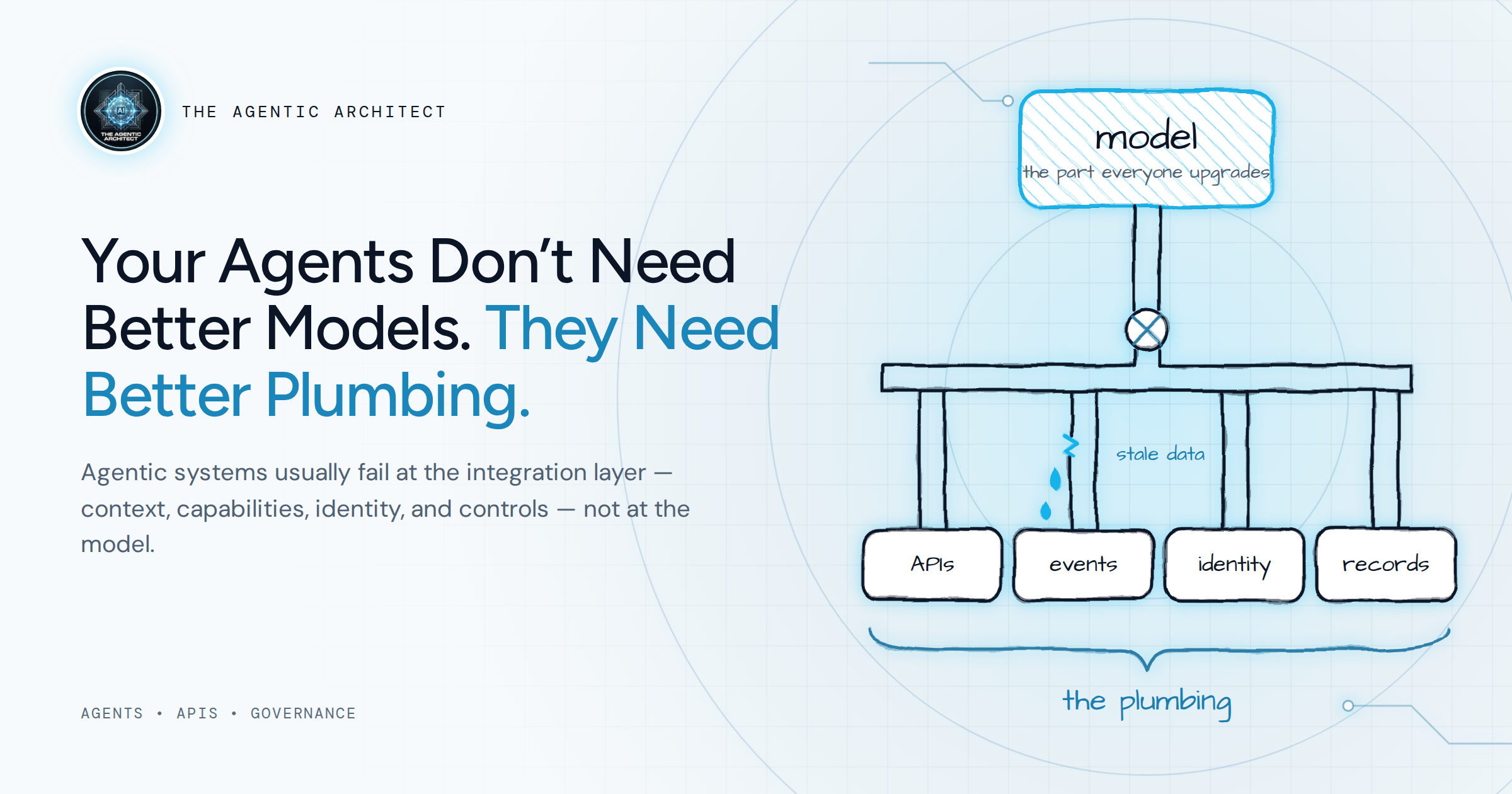
Your Agents Don’t Need Better Models. They Need Better Plumbing — a model sitting atop APIs, events, identity, and records, with stale data dripping through

Your Agents Don’t Need Better Models. They Need Better Plumbing.

There is a familiar pattern in enterprise AI projects. The team starts with a model. When the prototype disappoints, they change the prompt. Then they add retrieval. Then they try a larger model, a longer context window, or a new framework. Eventually someone asks the question that should have come first: why does the agent still fail when it leaves the demo? Often, the model is not the answer. The plumbing is. ...

September 22, 2026 · 5 min · 918 words · Hugo Guerrero